
Amar Chawla, PhD
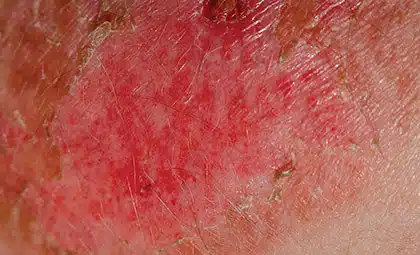
As of October 1, 2025, the RECELL® Autologous Cell Harvesting Device is eligible for a New Technology Add-On Payment (NTAP) under Medicare’s Inpatient Prospective Payment System (IPPS) rule for FY 2026.1 This designation applies to inpatient use of RECELL for acute, non-thermal full-thickness skin wounds, when used in combination with meshed autografting for adult patients after traumatic avulsion (for example, degloving) or surgical excision (for example, necrotizing soft tissue infection) or resection (for example, skin cancer).
NTAP designation is granted for FDA-authorized innovations that demonstrate substantial clinical improvement compared to existing care and affirms RECELL’s transformative role in redefining acute wound care.
What is NTAP?
Medicare pays hospitals a single bundled amount (MS-DRG payment) for the patient’s entire episode of care during an inpatient stay. This payment covers all costs for the patient’s hospital care, including room and board, nursing and lab services, and administrative and support services. Most devices and drugs are included in this bundle. To ensure hospitals are adequately reimbursed for the cost of new, innovative technologies not yet reflected in MS-DRG rates, the Centers for Medicare & Medicaid Services (CMS) created the NTAP program in 2001 for hospitals who submit Medicare fee-for-service (FFS) claims using MS-DRG codes.
NTAP is an additional payment to hospitals above the standard MS-DRG payments for eligible cases to help offset the cost of newly approved technologies.
A rare NTAP in wound care underscores clinical significance
Between Oct 2022 – May 2025, among all medical devices that received FDA marketing authorizations, less than 1% have received NTAP designation.2,3,4 In wound care, NTAP is an exceptionally rare designation: only three other technologies in the ~25 year history of NTAP have ever received this designation.5 For RECELL, CMS’s NTAP designation builds on the FDA’s earlier Breakthrough Device designation for the same indication.6 Together, these milestones signal CMS’s intent to incentivize hospital adoption for acute non-thermal wounds.
Implications for hospitals: Dual benefit
In a recent real-world study, RECELL was observed to have reduced hospital length of stay by 36% in deep partial-thickness (DPT) thermal wounds less than 30% TBSA.7 This study confirmed the length of stay benefits previously reported in burn wounds, and based on clinical similarities, comparable reduction in length of stay for acute non-thermal full-thickness wounds is expected.8,9,10,11 With NTAP now in place, hospitals potentially gain a dual advantage in treating non-thermal acute wounds:
- Cost benefit: Reduction in length of hospital stays and associated hospital costs.
- Supplemental payment: Additional NTAP payments on top of the MS-DRG.
This combination helps hospitals deliver improved patient care while reducing financial barriers to adoption.
Final thoughts: Why NTAP matters
The implications of this decision are profound. It establishes a precedent that evidence-based wound care technologies can, in fact, qualify for NTAP when supported by data showing differentiated clinical benefit. This development opens the door for future next generation wound care technologies to bring their innovation into the inpatient care settings. For AVITA Medical, the designation provides a critical pathway for hospital adoption by offsetting cost concerns until DRGs are recalibrated to reflect the new standard of care.
Key details: NTAP FAQs for hospitals:
How NTAP Works
NTAP is an additional amount added on top of the standard DRG whenever RECELL cases meet CMS’s criteria.
- The total payment for an eligible RECELL inpatient case includes: MS-DRG payment + NTAP add-on of up to 65% of the device cost above the MS-DRG payment, capped at $4,875 per case.
Eligible Patients
NTAP for RECELL applies only to Medicare fee-for-service (Part A) beneficiaries treated in the inpatient hospital setting for acute, non-thermal full-thickness skin wounds. It does not apply to acute thermal wounds, outpatient cases, Medicare Advantage, or commercial insurance.
Billing Requirements
Hospitals must report both the ICD-10-PCS procedure code for RECELL and a qualifying diagnosis code from CMS Table 10A or 10B. Without this coding combination, NTAP will not be applied.12
Effective Date
October 1, 2025 – September 30, 2026.
Does NTAP affect physician reimbursement?
No. NTAP applies only to hospital facility payments.
For questions about NTAP billing and reimbursement for RECELL, contact the AVITA Health Economics & Market Access team at HEMA@AVITAmedical.com.
References:
1. FY 2026 IPPS Final Rule: https://public-inspection.federalregister.gov/2025-14681.pdf
2. FDA PMA Database: https://www.accessdata.fda.gov/scripts/cdrh/cfdocs/cfPMA/pma.cfm
3. FDA 510K database: https://www.accessdata.fda.gov/scripts/cdrh/cfdocs/cfpmn/pmn.cfm
4. Tsuruo S, et al, Services and payments associated with the medicare new technology add-on payment program. Health Aff Sch. 2025 Jan 16;3(1)
5. Company analysis of CMS’s IPPS Final Rules, FY2002-2026
6. https://www.fda.gov/medical-devices/how-study-and-market-your-device/breakthrough-devices-program#metrics
8. Kowal et al. Adv Ther. 2019;36(7):1715-29
9. Carter et al. Adv Ther. 2022;39(11):5191-202.
10. Carson et al. Burns. 2023;49(3):607-14
11. Kahn, SA, et al. Adv Ther. 2024; 41(3):891-900
12. Table 10 (ZIP): Relevant ICD-10 Codes for Certain FY 2026 New Technology Add-On Payments