Debbie Mikkelson, RN, BSN
In the management of acute burns and complex wounds, temporary coverage following excision is something we rely on every day in practice. When autografting is not immediately an option, or when the goal is to preserve dermis and optimize the wound bed, we need solutions that protect the wound while helping us determine when it’s ready for definitive closure.
For over a century, human cadaveric allograft has been a trusted tool in these situations. It has long served as a reliable method for temporary coverage, helping protect excised wounds, reduce fluid loss, and provide a biologic barrier while we assess wound bed viability. It continues to be an effective bridge to autografting and plays an important role in burn and wound care.
Allograft challenges
That said, anyone who has worked with allograft knows it comes with challenges. Availability isn’t always guaranteed, especially in urgent or large cases. It requires cryopreservation and careful handling, which adds complexity. 1 Cost can also be a concern, particularly when multiple applications are needed. Sizes can be limiting, and while uncommon, there is still a level of concern around disease transmission or cross-contamination.1
An alternative to allograft
PermeaDerm®, a biosynthetic wound matrix, is gaining increasing clinical attention as a dependable option for temporary wound coverage, particularly when clinicians need something that’s readily available and straightforward to apply.
After more than 40 years of caring for burn and wound patients, I’ve had the opportunity to work with a wide range of products and approaches. In my experience using PermeaDerm across multiple patients, it has proven to be safe and effective for wound management and a cost-conscious alternative to allograft.
PermeaDerm advantages over allograft
PermeaDerm offers several practical advantages over allograft:
Shelf-stable without additional tracking
- PermeaDerm is available when clinicians need it, without delays or logistics that can be associated with frozen products.
- Tissue tracking is not required for PermeaDerm. That eliminates a time-consuming chore and frees up clinician time.
Two-layer, transparent design
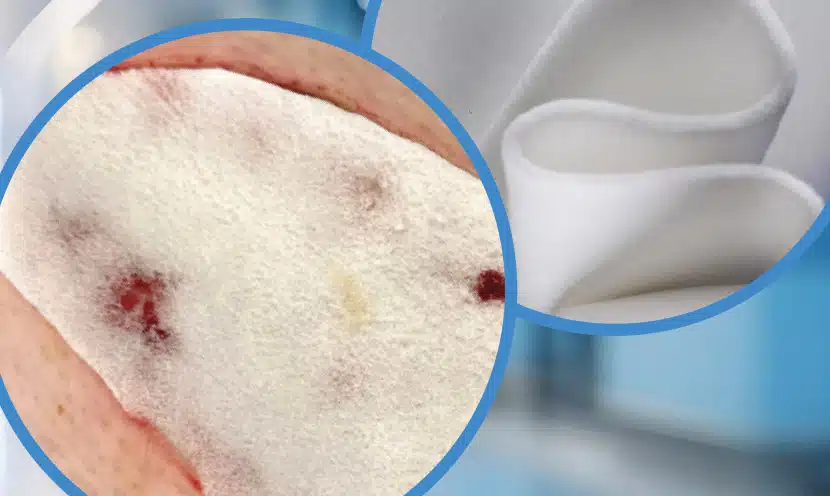
- PermeaDerm is made up of two layers that work together to support healing. The outer silicone layer provides protection while allowing oxygen exchange, which is important for the wound environment. The inner layer is a nylon matrix coated with collagen and aloe. Hypoallergenic type I collagen helps keep the wound environment properly moist, which supports healing. Aloe vera helps speed healing by boosting skin cell growth and increasing collagen production. Together, they create a better environment for the skin to repair itself more quickly.2
- PermeaDerm is transparent, which is something I’ve found especially helpful; clinicians can assess the wound without having to remove it.
Application
- Application is simple and very similar to what clinicians are already familiar with.
- It comes in a wide range of sizes—up to 15 by 30 inches—which makes it easier to cover larger areas without piecing together multiple grafts.
- Post-operative care also feels familiar, with changes typically every two to three days.
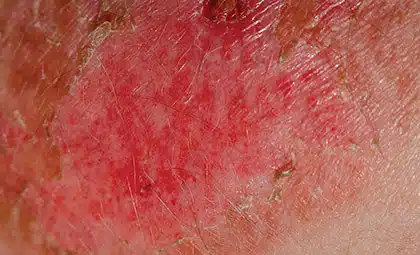
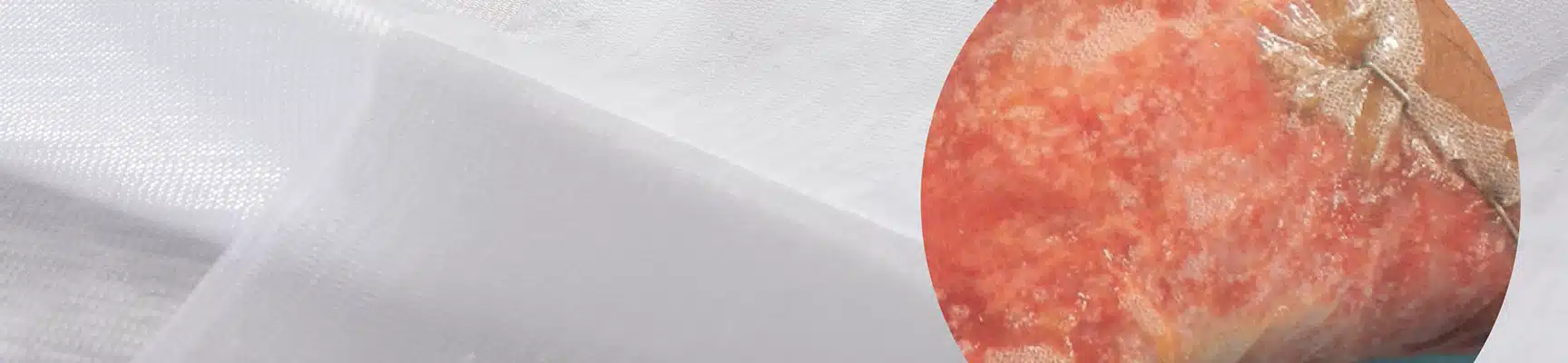
At the bedside, what matters most is what the wound is telling the clinician. With PermeaDerm, color and adherence become primary indicators. Areas that are pink to red and adherent generally indicate a healthy, viable wound bed. In contrast, areas that appear pale, yellow, brown, or gray (and/or not adhering) can indicate non-viable tissue and the need for further excision. In that way, it is doing more than covering the wound; it’s helping guide clinical decision-making.
Tools that help us move more quickly and confidently toward graft readiness can make a meaningful difference in both outcomes and patient experience.
This kind of visibility and feedback is especially valuable as we continue to focus on getting wounds to closure more efficiently. The longer a wound remains open, the greater the risk of complications such as infection, delayed healing, and scarring. Tools that help us move more quickly and confidently toward graft readiness can make a meaningful difference in both outcomes and patient experience. As we’ve seen with newer technologies, supporting faster progression to a healthy wound bed can reduce complications and improve overall recovery timelines.
In many cases, wound bed stability and readiness for grafting with PermeaDerm can be assessed within the first several days after application, based on adherence and color. When longer-term temporary coverage is needed, such as when donor sites are limited or the patient isn’t yet stable, it can remain in place with periodic reassessment. In those situations, changing it every one to two weeks helps prevent excessive tissue ingrowth and allows for continued evaluation of the wound.
As our field continues to evolve, it’s important that we continue to evaluate tools not just for how they perform in theory, but for how they work in real clinical settings. PermeaDerm is one of those tools. It is practical, accessible, and supportive of both healing and clinical decision-making when it matters most.
Learn more about PermeaDerm, or view the Application and Aftercare Guide to see how it works.
References:
1. Clinical evaluation of skin substitutes. Kearney JN. Burns. 2001;27:545–551. doi: 10.1016/s0305-4179(01)00020-1.
2. Woodroof EA, Phipps RP, Greenwood JE, Hickerson W, Herndon D. The Search for an Ideal Temporary Skin Substitute: AWBAT Plus, a Combination Product Wound Dressing Medical Device. Eplasty. 2010 Sep 15;10:e60. PMID: 20862296; PMCID: PMC2941189.