
Victoria Miles, EMT-P, MD
Throughout our training as physicians, wound closure was treated as the finish line in burn care. Were we closed by day X? Did the graft take? Can we safely discharge the patient? What percent was the wound closed at discharge? These were the metrics we celebrated.
Over the past decade, and especially in the last few years, the field has undergone a quiet but profound shift. Wound closure should no longer be the pinnacle.
The true goal is this: your patient goes to church, goes to their child’s school, walks into the grocery store, and is not immediately marked by their injury.
We are not there yet. But we could be.
More than earlier re-epithelialization
Today we are combining enzymatic debridement with RECELL® autologous skin cell suspension autografting to treat facial burns in ways that preserve far more than skin. This approach allows us to remove devitalized tissue with precision, protect viable dermis, and regenerate the epidermis using the patient’s own cells.
The result is not just earlier re-epithelialization. The combination of technologies produces softer texture, more natural pigmentation, and a healing trajectory that supports a patient’s ability to return fully to their pre-injury life. This is far beyond what we ever achieved with traditional Weck excision and sheet grafting.
Modern approaches allow us to deliver something we simply did not have before: wound closure that prioritizes aesthetic outcomes, pain reduction, decreased hospital length of stay and increased discharge to home, and patient dignity.
These outcomes should not only change our patients’ lives; they should change our philosophy. Closure is not the end game. The quality of healing is. Modern approaches allow us to deliver something we simply did not have before: wound closure that prioritizes aesthetic outcomes, pain reduction, decreased hospital length of stay and increased discharge to home, and patient dignity.
Why “just close the wound” is no longer enough
Traditional autografting works, but it comes at a price. Donor sites are often more painful than the burn itself, and they carry the risk of infection, scarring, discoloration, and delayed healing of the overall wound burden. These risks are magnified in patients with massive burns, limited donor sites, or chronic comorbidities. Our patients have always paid that cost. We simply accepted it as unavoidable.
Beyond the surface: Healing at the cellular level
One of the most important conceptual shifts in burn surgery is recognizing that re-epithelialization is not just mechanical. It is biologic.
Autologous skin cell suspension delivers the patient’s own keratinocytes, fibroblasts, and melanocytes directly to the wound bed, supporting healing throughout the wound rather than only at the margins. Clinically, that means:
• More rapid epithelial coverage
• Restoration of pigmentation
• Improved texture and pliability
• Durable results without significantly increasing operative burden
Every burn provider has seen a wound that was technically closed but ultimately produced functional limitation or a disfiguring hypertrophic scar. Cellular therapies give us a chance to close wounds in ways that respect long-term form and function.
This is where we must direct our efforts as a burn community.
With technology evolving quickly, patients now expect and deserve outcomes that prioritize mobility, appearance, and quality of life. Hospitals need tools that reduce length of stay and resource utilization. Surgeons want approaches that allow us to heal more while causing less harm.
When used appropriately, skin cell suspension autografting aligns with all of these goals.
Autologous skin cell suspension in our practice
As a community, we have incorporated RECELL into care algorithms for:
• Deep partial-thickness burns where donor site morbidity can be almost completely avoided
• Full-thickness wounds where wide-mesh autografting would otherwise require large donor harvests and lead to hypertrophic scarring
• Complex extremity trauma, necrotizing soft tissue injury wounds, degloving injuries, and other nonthermal defects where traditional grafting carries high patient cost
The supporting data mirror what we see in practice. We can achieve reliable closure using significantly less donor skin, without compromising safety, and with improved long-term aesthetic outcomes.
The future of burn wound healing: Meaningful recovery
Our field has evolved from “close the wound at all costs” to “heal the patient with the least burden possible.” This is more than a procedural change. It represents a shift in values. It means measuring what matters: pain, mobility, pigmentation, function, and the patient’s ability to return to the life they led before their injury.
Innovations like skin cell suspension autografting, enzymatic debridement, and laser scar treatment are not replacing surgical judgment. They are expanding on what thoughtful burn and reconstructive care can achieve. As we continue refining our algorithms and generating evidence, I believe we will look back on this era as the moment burn surgery truly moved beyond closure and toward meaningful recovery.
Looking for more like this? Read “Reseeding” Wounds: Fast-Track Healing and Skin Renewal or learn more about RECELL Spray-On Skin™ Cells.
About the author
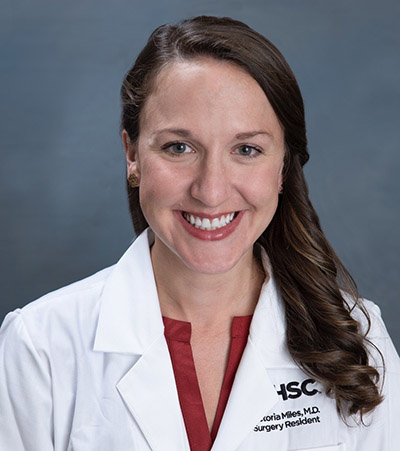
Victoria Miles, EMT-P MD, is an Assistant Professor of Burn Surgery at University Medical Center New Orleans in association with Louisiana State University Health Science Center New Orleans. Dr. Miles completed her general surgery residency and research years at the University of Tennessee College of Medicine Chattanooga, then completed her Surgical Critical Care and Burn Surgery Fellowship at University of Texas Southwestern, Parkland Hospital, in Dallas where she received the Top Knife Award for Best Fellow Technical Skills. Her research interests include military and EMS burn education, burn hypermetabolism and nutrition, limb salvage, and acute burn resuscitation and coagulopathy. Dr. Miles directs the American Burn Association Mentorship Program and serves on the American Burn Association’s Reconstruction and Membership Advisory Committees.
The views and experiences described above are the author’s own and may or may not reflect those of AVITA Medical.