Melissa Kersten, APNP
Moist wound healing is not a new concept, but it remains one of the most important and sometimes misunderstood principles in wound management. When a wound environment is appropriately moist, keratinocytes migrate more efficiently, growth factors remain active at the wound surface, and epithelialization progresses with fewer interruptions. Exposed nerve endings are also shielded from air and friction, which directly affects pain. These principles are well established and familiar to most clinicians caring for burns, donor sites, and acute traumatic wounds.
The challenge is not whether moist wound healing works. The challenge is maintaining the right balance in real clinical settings.
Wound unpredictability influences dressing changes
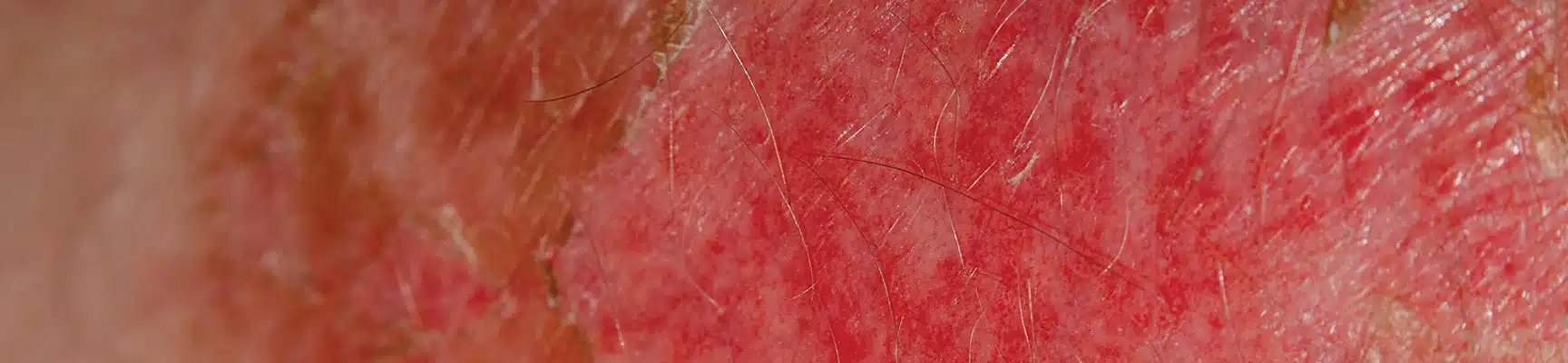
Acute wounds rarely behave in predictable ways. Partial-thickness burns often vary in depth across the same wound. Donor sites can drain heavily for days. Friction injuries and road rash frequently involve areas of intact dermis adjacent to more severely injured tissue. Surgical wounds may have unpredictable exudate or sensitivity. In these situations, frequent dressing changes are often required to manage drainage, but repeated manipulation of a fragile wound bed can disrupt healing and increase pain.
This tension between moisture control and wound stability is where many clinicians struggle. It is also where temporary biosynthetic wound matrices can play a useful supporting role.
The impact of a biosynthetic wound matrix
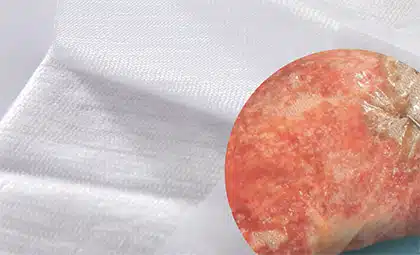
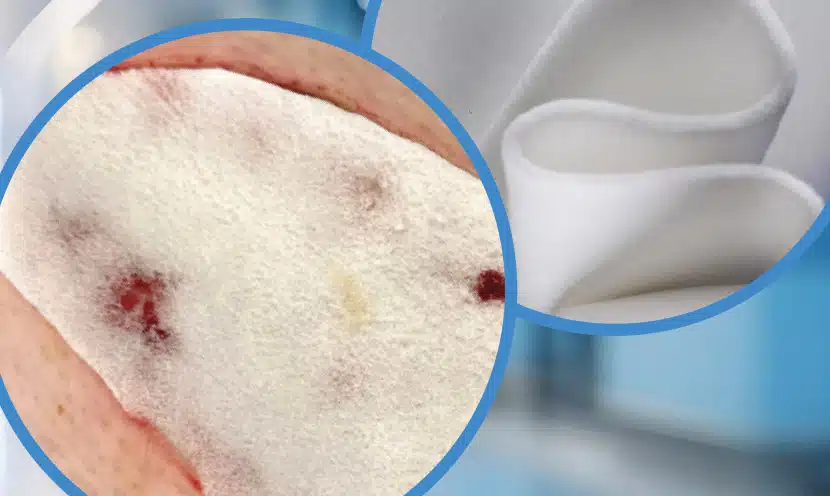
Temporary biosynthetic wound matrices are non-cellular, non-living materials designed to function as a temporary artificial skin layer. They are sometimes referred to as biosynthetic skin substitutes. Examples include PermeaDerm®, Biobrane™, and Suprathel®. These products are not grafts and do not contain living cells. Their purpose is structural and protective rather than biologic replacement.
When applied to a clean, viable wound bed, a biosynthetic matrix adheres to the surface and creates a stable interface between the wound and the external environment. Secondary dressings are still required, and exudate management remains essential. These materials do not eliminate the need for sound wound care fundamentals, but they can help reduce the amount of daily disruption the wound experiences.
In practical terms, clinicians often observe several consistent benefits when these products are used appropriately. By shielding exposed nerve endings, they reduce pain associated with air exposure and friction. By limiting evaporative water loss while allowing controlled fluid movement, they help support moisture balance rather than allowing wounds to dry or become oversaturated. By remaining in place, they protect the wound bed from shear and external trauma and reduce the frequency of dressing changes.
Each dressing removal, even when performed carefully, causes a degree of microtrauma. Early epithelial migration is particularly vulnerable to this repeated disruption. A stable biosynthetic layer that remains in place during the early phases of healing can help preserve that fragile progress.
Protecting the wound bed from cumulative trauma
An additional benefit that is sometimes overlooked is the reduction in cumulative wound bed trauma over time. Each dressing removal, even when performed carefully, causes a degree of microtrauma. Early epithelial migration is particularly vulnerable to this repeated disruption. A stable biosynthetic layer that remains in place during the early phases of healing can help preserve that fragile progress.
Partial-thickness burns are a clear example of where this approach can be useful. Most partial-thickness burns will heal without grafting when the dermis is preserved. However, healing can be delayed by repeated dressing changes, mechanical trauma, and poorly controlled pain. A biosynthetic matrix provides consistent coverage and allows epithelial cells to migrate without repeated interruption, while also improving patient comfort.
Traumatic wounds such as road rash and friction injuries present similar challenges. These wounds often have irregular surfaces and mixed tissue viability. Frequent cleansing and dressing changes may unintentionally damage areas of intact dermis. In selected cases, a temporary biosynthetic layer can help protect viable tissue and reduce repeated trauma associated with daily manipulation.
Benefits to donor sites
Donor sites also benefit from this approach. Both split-thickness donor sites and chronically reharvested sites are often associated with heavy drainage and significant pain. Frequent dressing changes can be traumatic for patients and disruptive to healing. A stable synthetic layer can reduce dressing frequency, decrease mechanical disruption, and improve patient comfort while healing progresses.
Temporary biosynthetic matrices for reducing pain
Pain control deserves specific attention. Pain is often treated as a secondary symptom rather than a primary clinical outcome. In practice, poorly controlled pain has far-reaching effects. Patients limit movement, avoid deep breathing, and disengage from care. Stress responses increase, functional recovery slows, and overall costs rise for both the healthcare system and the patient.
By shielding nerve endings and reducing repeated wound manipulation, temporary biosynthetic wound matrices can significantly reduce pain. This pain control supports functional recovery, improves tolerance of necessary care, and contributes to a smoother healing trajectory. While pain reduction alone does not heal a wound, it meaningfully influences how patients experience and participate in their recovery.
What doesn’t a biosynthetic wound matrix do?
It is equally important to be clear about what these products do not do. Temporary biosynthetic wound matrices do not replace grafting when grafting is indicated. They do not treat infected wounds and should not be applied over nonviable tissue. They do not compensate for inadequate debridement, poor hemostasis, or compromised perfusion. Successful use depends on proper wound bed preparation and ongoing moisture management. When these fundamentals are not addressed, product failure is often related to technique rather than the material itself.
How can it reduce costs?
Cost considerations are also part of real-world decision-making. Material cost is only one component of overall wound care expense. When used appropriately, temporary biosynthetic wound matrices can reduce dressing frequency, nursing time, and analgesic requirements, while improving patient experience. A stable wound interface can also reduce variability in wound handling across providers, which is particularly relevant in busy acute-care environments where consistency of care is difficult to maintain.
Temporary biosynthetic wound matrix as a support tool
Moist wound healing remains a cornerstone of effective wound management. The difficulty lies in maintaining the right environment for wounds that cannot tolerate frequent manipulation. Temporary biosynthetic wound matrices are not a replacement for clinical judgment or foundational wound care principles. They are a supportive tool that can help protect the wound, stabilize the healing environment, and reduce pain.
When applied to a properly prepared wound bed, with attention to perfusion, exudate control, and secondary dressings, these materials support more predictable healing and improved patient comfort. Used thoughtfully, they can help clinicians better align real-world care with the principles of moist wound healing.
Looking for more on this subject? Read PermeaDerm as a Sound Option for a Primary Wound Matrix or Wound Management with a Biosynthetic Wound Matrix: Versatility and Benefits.
Learn more about PermeaDerm or view instructions for use.
The views and experiences described above are the author’s own and may or may not reflect those of AVITA Medical.