Sigrid A. Blome-Eberwein, MD
As a burn and reconstructive surgeon, I have been in the business of healing large open wounds for 25 years. When a dermal wound has no or minimal healing potential, we move from “helping the healing along” to aggressively “closing the wound.”
Wound closure is a layered complexity
The skin has two very different layers: the dermis, and the epidermis. Some people have said that while epidermis means life, dermis means quality of life.
Epidermis: The protective barrier
The epidermis functions as a sealing envelope around our entire body, protecting us from environmental factors, controlling temperature and evaporation, and building a mechanical barrier. The main cell found in the epidermis is the keratinocyte, which supports structural formation of the skin.
Dermis: The structural scaffold
The dermis, on the other hand, provides a scaffold for glands and hair follicles, nerve endings and tiny blood vessels, and provides durability and elasticity. The main cell type in dermis is the fibroblast which is critical for skin strength.
Traditional methods for wound closure
Traditional options available to close a large wound are very limited, despite the plethora of so-called “skin substitutes” out there. Although years of research have been spent, a fully functional skin replacement is still far in the future. We are limited to autologous skin transplantation, sometimes with augmentation through various scaffolds or dermal regeneration platforms (dermal skin substitutes), which can be biologic or synthetic or both.
However, the actual wound closure remains dependent solely on autologous epidermal cell transplantation. These can be transplanted in the form of a split-thickness skin graft, meshed for expansion, or unmeshed as a sheet, or isolated and grown to multi-layer sheets in the laboratory (cultured epithelial autograft).
The laboratory grown cell sheets are very expensive and very difficult to grow on the wound bed. For many years this was the only option to cover extreme body surface area burn wounds that did not have enough donor sites for traditional split thickness skin grafts.
“Reseeding” the skin: The future of wound care
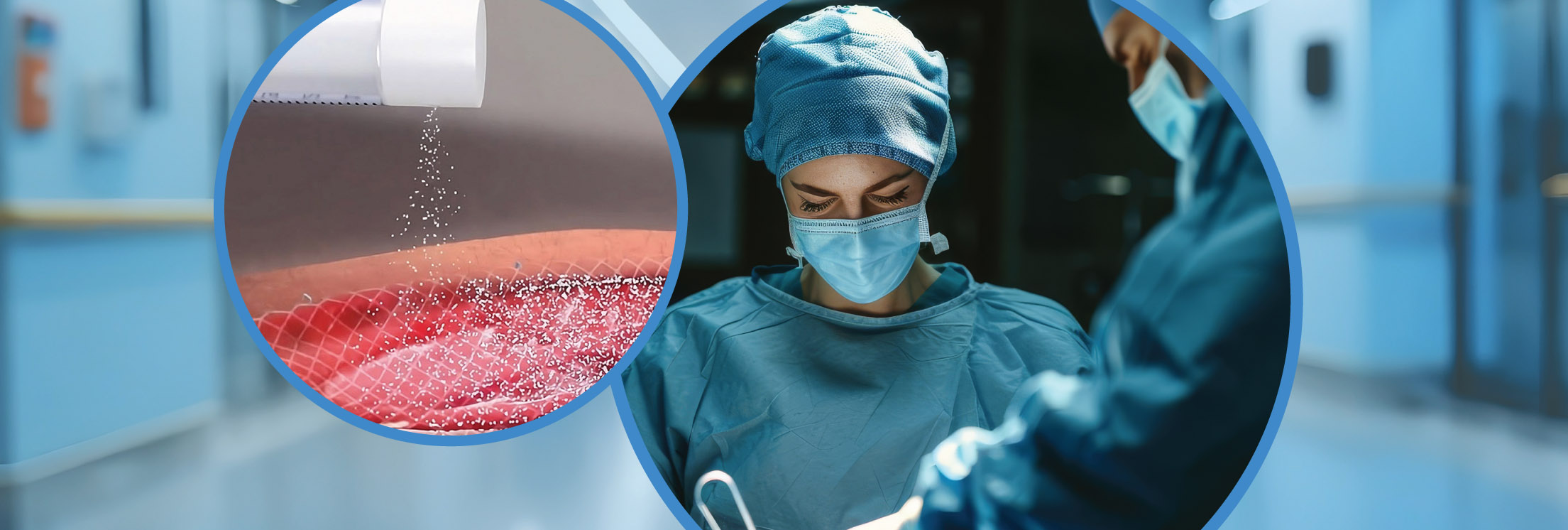
The RECELL® System offers us a new way to cover large areas of wound with epithelial cells. The cells are isolated from a small piece of autologous donor graft by enzymatic and mechanical separation at the point of care (same day, one procedure).
The cells are then drawn up in buffer solution and sprayed onto the prepared wound bed, most often with some form of dermal underlay (a meshed split-thickness skin graft or native dermis, depending on the depth of injury). A one square inch piece of skin donor can cover up to 80 square inches of wound this way. The cells then grow on the wound, as long as the growing conditions are optimized, as opposed to in the laboratory (like cultured epithelial autograft).
One can equate the concept to growing a lawn: seeds are dispersed evenly on a prepared bed of soil that must be free of dead grass and toxins and is nutrient rich. The seeds cannot be allowed to dry out, nor should they be washed away by too much water. They need to stay warm and clean. Eventually small sprouts will grow into a contingent lawn.
Similarly, the cell seedlings need to be kept moist (not wet) and warm (not hot), clean and mechanically protected, to eventually grow into a complete epidermal cover of the wound. These considerations dictate the wound care decisions post Spray-On Skin™ Cell application: a mechanical cover that is permeable to secretion, but prevents drying out, a wound antiseptic that maintains slightly acidic pH and kills bacteria, not cells, and patience to slowly let them grow.
Patients are generally able to leave the hospital earlier, and I have noticed that the scars after Spray-On Skin Cells are smoother, have a better color match, and less mesh pattern than scars after traditional skin grafting.
I have used the RECELL System now on many patients to close their wounds faster and reduce donor sites, and on patients that would have commonly received traditional skin grafting or taken a very long time to heal. Patients are generally able to leave the hospital earlier, and I have noticed that the scars after Spray-On Skin Cells are smoother, have a better color match, and less mesh pattern than scars after traditional skin grafting. Some deep, second-degree wounds that would have scarred with hypertrophy were able to heal without a lot of scarring. In my experience, using RECELL helps my patients get better faster and with less severe long-term scarring.
Looking for more like this? Read Beyond Closing Wounds: The Science of Restoring Form and Function.
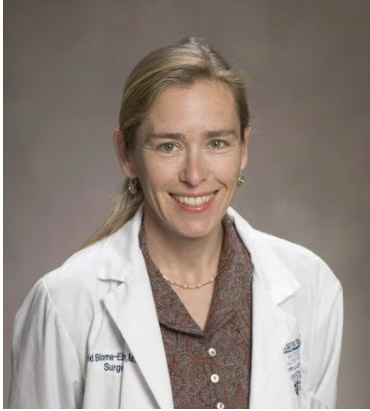
About the author
Dr. Sigrid A. Blome-Eberwein has established a remarkable career as a medical professional, specializing in plastic and reconstructive surgery with a particular focus on burn care. She has held significant positions since the beginning of her career, following her medical education at Freie Universität Berlin and subsequent residencies in general surgery and plastic reconstructive and hand surgery at prestigious institutions in the United States and Germany. As an attending surgeon, Dr. Blome-Eberwein has been instrumental in advancing burn care techniques, evident in her role as the Associate Medical Director at the Regional Burn Center at Lehigh Valley Health Network. Her extensive research in burn surgery, pain control, and reconstructive techniques highlights her commitment to medical innovation and patient care.
The views and experiences described above are the author’s own and may or may not reflect those of AVITA Medical.