Jamie Hollowell, DNP, RN, ACNP
Choosing the right primary dressing for our vulnerable burn patients is essential. We want to ensure optimal healing, reduce infection risk and improve patient outcomes.
In our burn center, we have found that using PermeaDerm as a primary dressing has been a game changer for many of our patients.
Biosynthetic wound matrix versatility supports healing
What makes PermeaDerm stand out as a primary dressing, and why are more clinicians incorporating it into their protocols? In my experience, it would be for its versatility and effectiveness. Its unique design supports the necessary functions of a primary dressing while reducing burden on both staff and patients.
Direct contact with the wound bed means a primary dressing has many functions, including protecting the wound from contamination and promoting a healing environment. It should also minimize pain and anxiety during dressing changes or wound care. PermeaDerm stands out by achieving all of these things. Its unique design supports the necessary functions of a primary dressing while reducing burden on both staff and patients.
The impact of fewer primary dressing changes
Pain is one of the most common concerns of a burn patient. Perhaps the most significant benefit from a patient and staff perspective is the ability for PermeaDerm to stay in place for several days and lessen frequency of potentially painful dressing changes – and reduce patient anxiety as a result.
Reduced frequency of dressing changes can help minimize disturbance to the wound bed and reduce further injury to delicate, healing skin.
Longer time between dressing changes reduces burden on the burn center staff, since dressing changes are one of the more time-consuming parts of the job. Additionally, the reduced frequency of dressing changes can help minimize disturbance to the wound bed and reduce further injury to delicate, healing skin.
A grateful patient story
Like most of you, our patients experience a lot of anxiety with dressing changes, much of which is anticipatory anxiety. We recently had a patient with 28% total body surface area second degree scald burns, mostly to his torso and extremities. His initial admission debridement required near sedation-level medication so we couldn’t even do a full admission bath due his anxiety and pain intolerance.
His daily wound care during the few days he had to wait for the operating room (OR) were very difficult for both him and the staff due to his pain and anxiety. Upon return from the OR from wound debridement and PermeaDerm placement, he began experiencing panic attacks thinking about his first dressing change.
When the day finally came for the first dressing change, we had a well-planned regimen for pain and anxiety. But the patient was surprised to find that he barely needed any of the meds because he was mostly healed! His entire demeanor changed after that day, and he actually apologized to our staff for how difficult he had been those first several days.
While the staff is accustomed to a burn patient’s anxiety, it can be difficult when that anxiety is directed at you for days at a time. Even though it doesn’t erase it, having a patient change their entire demeanor and change their trajectory can add to the fulfillment of our jobs.
This patient is just one example of how PermeaDerm has changed the game in terms of reducing the burden for both our patients and our staff. We can make the day of a burn nurse, and the burn patient, maybe just a little less stressful by reducing the trauma and drama that typically come with a daily dressing change.
Wound management benefits
We have found several additional benefits of using PermeaDerm as a primary dressing:
Moisture balance
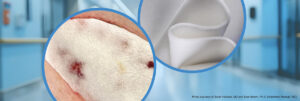
The porous nature of the product allows for moisture balance. Moisture can escape to prevent maceration, but the dressing maintains the type of moist environment that is optimal for wound healing.
Flexibility
The conformable nature of PermeaDerm allows it to easily fit irregular surfaces and non-uniform wound edges without pressure or requiring a bulky dressing. This allows for more flexibility for the patient, improving mobility and independence.
Transparency
The transparent design of PermeaDerm also makes it easier for clinicians to keep a close eye on the wound and adjust their plan of care accordingly. Since PermeaDerm is synthetic, there is a low risk of inflammatory responses seen with other types of skin substitutes.
How PermeaDerm works
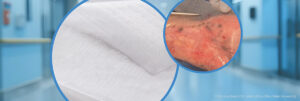
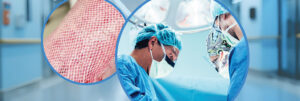
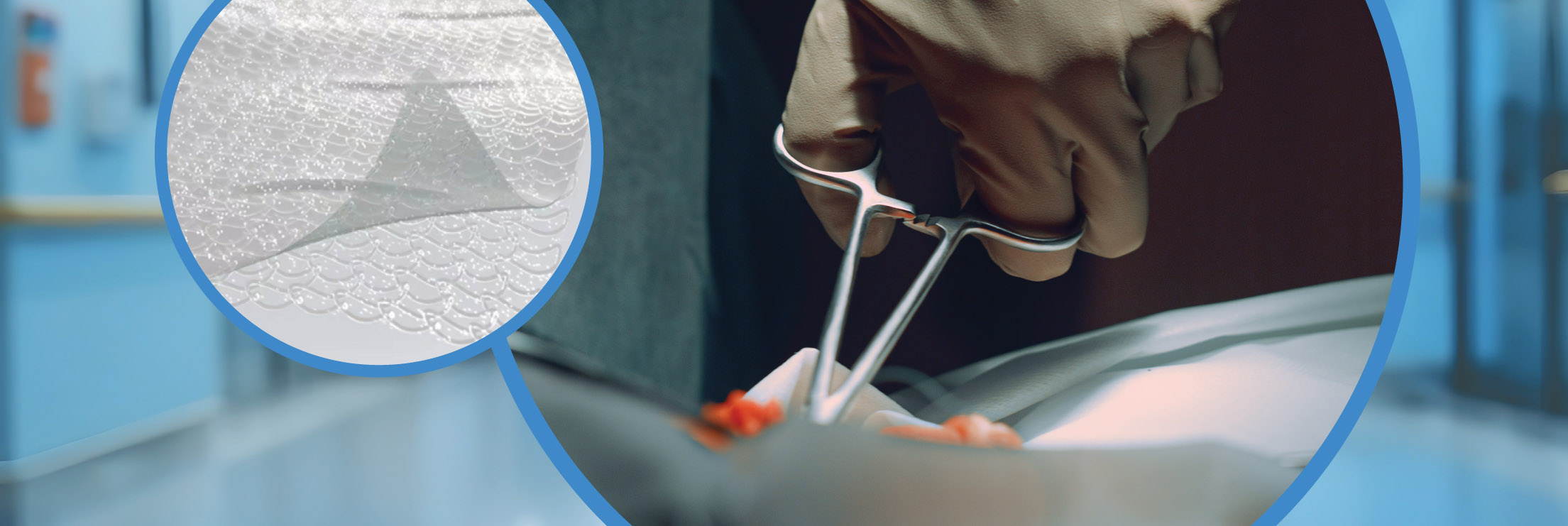
PermeaDerm is an FDA-cleared biosynthetic wound matrix used for the treatment of partial-thickness wounds, surgical wounds, trauma wounds, donor sites, and the coverage of meshed autografts.
It is comprised of an outer, perforated 2D silicone epidermal analogue and an inner 3D micro-support system with biocoating. This combination facilitates drainage of gas and exudate and expedites adherence to the wound bed to support early patient mobilization. It has been used in a variety of clinical applications, including burns, surgical wounds, chronic wounds, and donor sites.
Learn more about PermeaDerm, or read more on its impact in Modern Burn Care: Targeted Solutions to Optimize Patient Recovery.

About the author
Jamie Hollowell, DNP, RN, ACNP is a critical care nurse practitioner with over 20 years in healthcare. She is the APP Manager for the Surgical ICUs at UNC Hospital at the University of North Carolina Hospital and practices clinically as an NP in the NC Jaycee Burn Intensive Care Unit. Jamie’s interests include APP professional development and burn care quality improvement.
The views and experiences described above are the author’s own and may or may not reflect those of AVITA Medical.