
RECELL is a groundbreaking, point-of-care, FDA premarket-approved autologous skin cell suspension technology that helps clinicians achieve robust wound closure.1
Designed for treatment of thermal burns, full-thickness trauma, and full-thickness surgical wounds, RECELL supports re-epithelialization, minimizes or eliminates the need for large autografts, and contributes to shorter hospital stays that reduce overall cost burden – returning patients back to activities of daily living, faster.1-9

FASTER HEALING
Accelerates healing at the cellular level4-5
Reduced length of stay and associated costs2,7-8

BETTER OUTCOMES
Less donor-site pain6
Higher patient satisfaction with
donor-site aesthetics6

LESS INVASIVE
Up to 97% reduction in donor skin3,6,9
Up to 60% fewer autografting procedures1

Real-World Confidence
30,000+
patients treated worldwide
210+
publications
over 25+ years
16
randomized controlled trials across burns and full-thickness wounds
In 2025, CMS granted NTAP (New Technology Add-On Payment) to RECELL for the treatment of non-thermal full-thickness skin defects. Effective through September 30, 2026, this award supported hospital access to innovative wound care.
How healing happens with RECELL
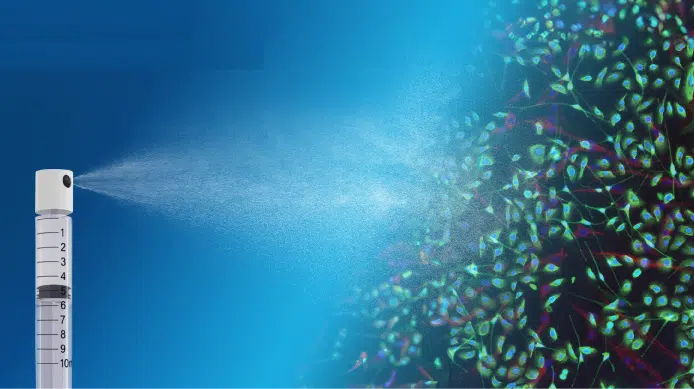
Clinicians harvest a thin sample of the patient’s own skin containing melanocytes, activated keratinocytes, and fibroblasts. The skin is processed in the device with the RECELL Enzyme™ to create an autologous skin cell suspension of Spray-On Skin Cells. When applied, the single cells generate re-epithelialization throughout the wound bed.1,10
RECELL can be used alone or in combination with a skin graft. The multi-phenotype solution works in concert with the patient’s biology to accelerate healing, improve donor site aesthetic outcomes, and minimize or eliminate the need for traditional skin grafting.1,4-6
Elevate standard of care with RECELL
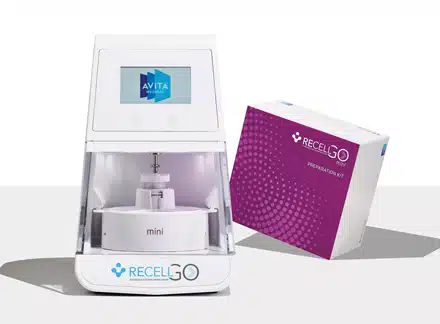
RECELL is available in three configurations to meet patient needs.

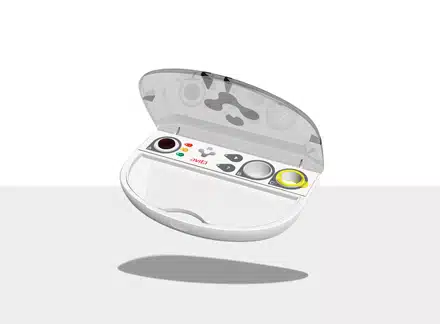
RECELL®
Manual system designed for treating wounds up to 1920 cm2

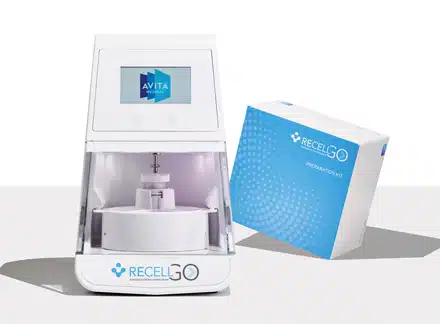
RECELL GO®
Automated system designed for treating wounds up to 1920 cm2
RECELL GO mini®*
Automated system designed for treating wounds up to 480 cm2
RECELL’s impact to healthcare systems
RECELL offers hospitals and health systems a powerful value proposition by accelerating wound closure and reducing donor skin harvesting.3-6
Patients with <30% TBSA deep partial-thickness burns spent 36% fewer days in the hospital when treated with RECELL than those treated with conventional autografts.2
SHORTEN LENGTH OF STAY BY

Up to $42K average savings per inpatient treated2,7-8
Up to an additional 13 patients per bed annually2,7-8
“From a national registry perspective, we are seeing significant hospital savings and a clearer understanding of how newer technologies like RECELL impact clinical decisions, length of stay, and patient outcomes.”
– Jeffrey E. Carter, MD, FACS, FABA
Real-world outcomes: Patient cases
Today, healing means more than just wound closure.
Accelerated Healing Case Example
Accelerated healing in a crush wound injury, resulting in early discharge
Highlights:
- Patient was discharged 4 days sooner than expected due to rapid epithelialization
- 95% re-epithelialization reached by post-op day 4
- The surgeon used 47% less donor skin compared with previous grafting technique
27-year-old male | 1353 cm² RECELL treatment area
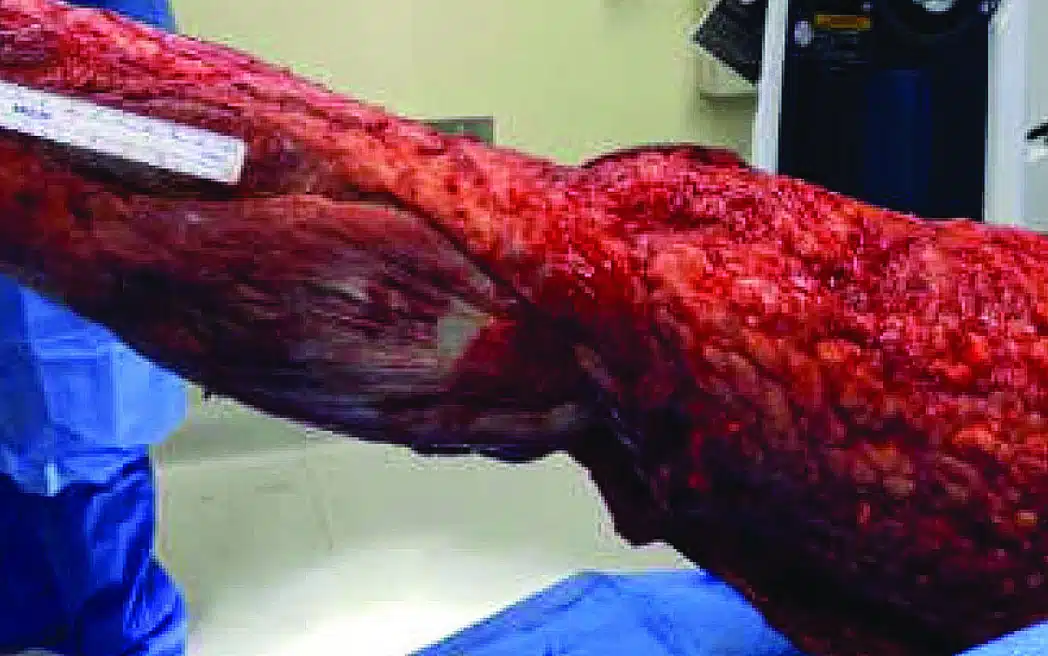
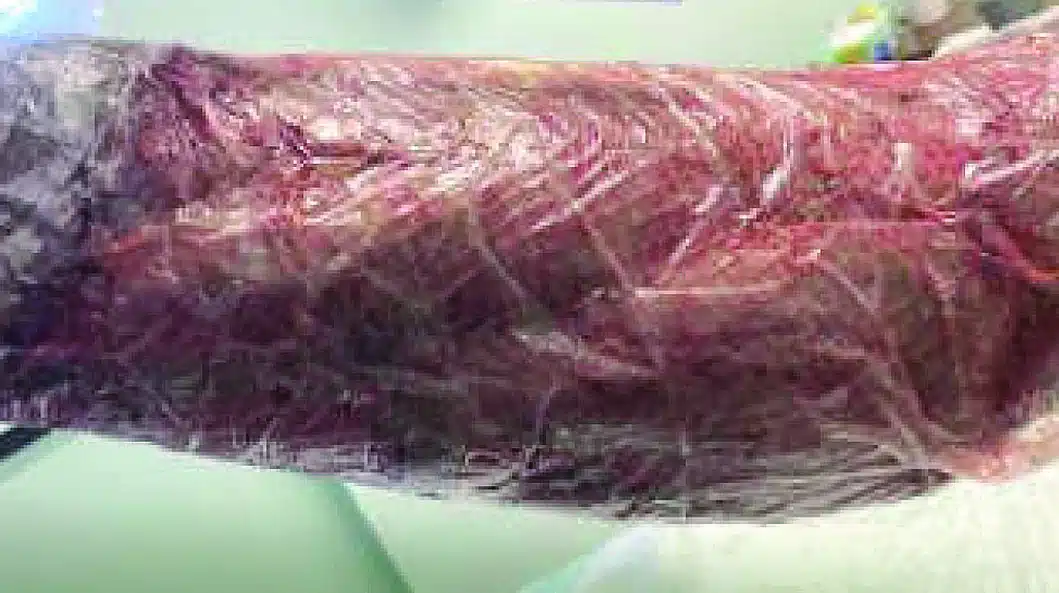
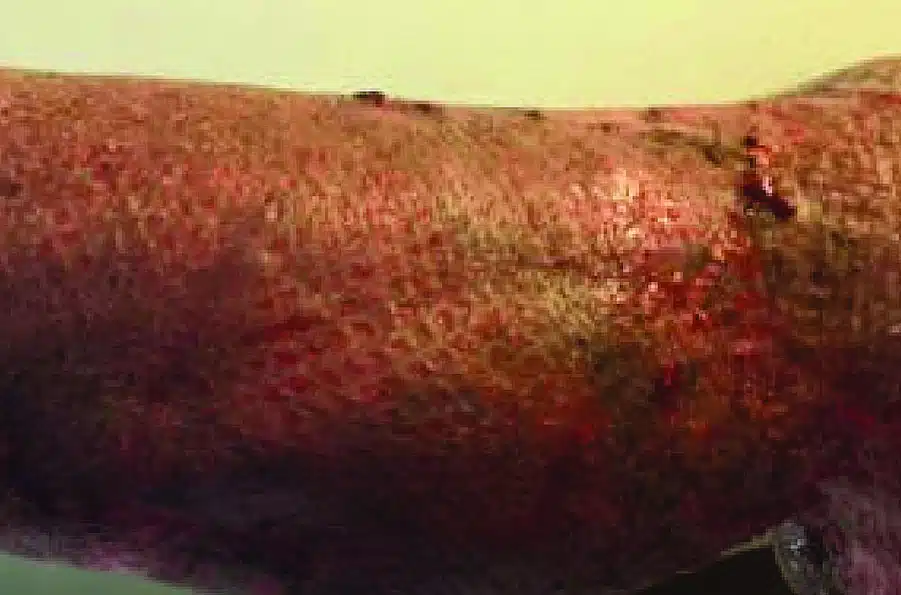
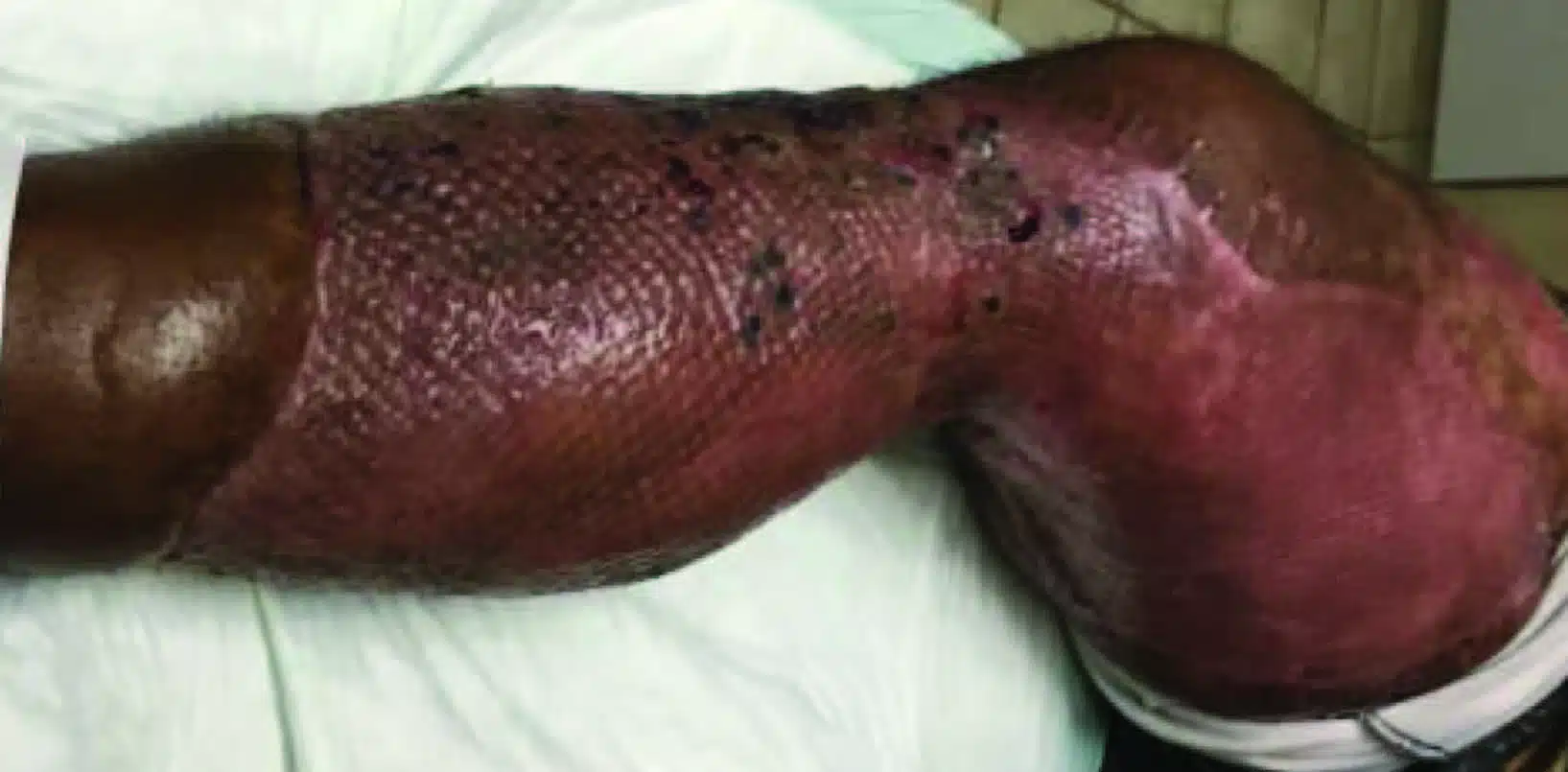
Case report courtesy of Carmen Flores, MD (University Medical Center of Southern Nevada; Las Vegas, NV)
Repigmentation Case Example
Facial burn wound with full pigment restoration
Highlights:
- After a severe facial burn injury, this patient’s care team used RECELL Spray-On Skin Cells
- Definitive wound closure by post-op day 9 with no signs of infection or inflammation
- With RECELL alone, progressive repigmentation, closely matching the surrounding skin, and a remarkable return of natural tone
31-year-old female | ~11% TBSA
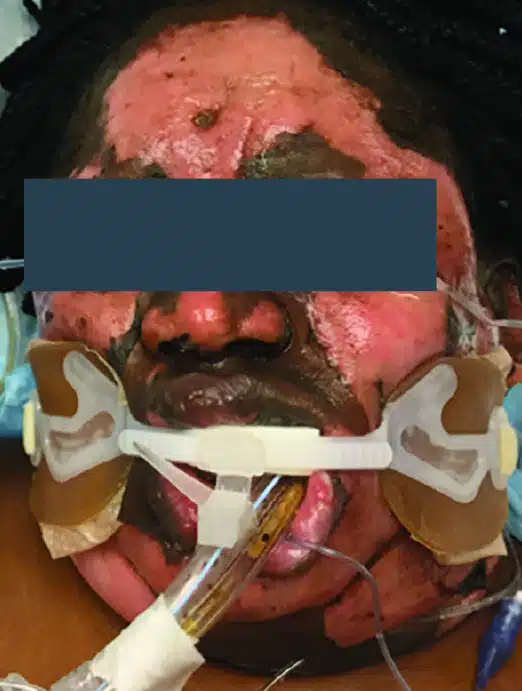
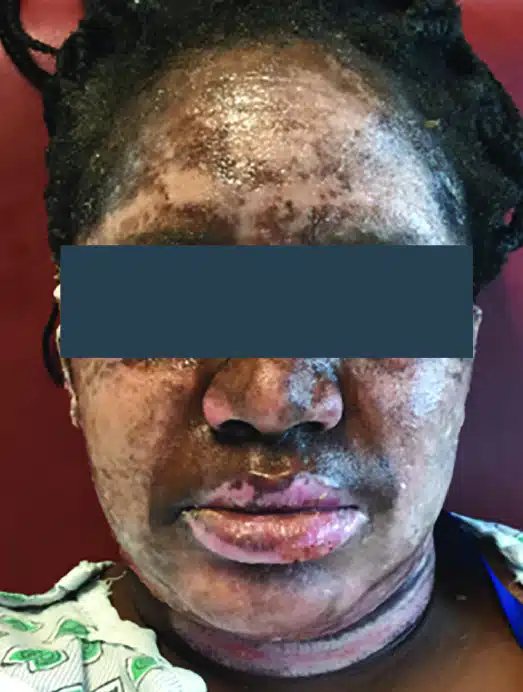
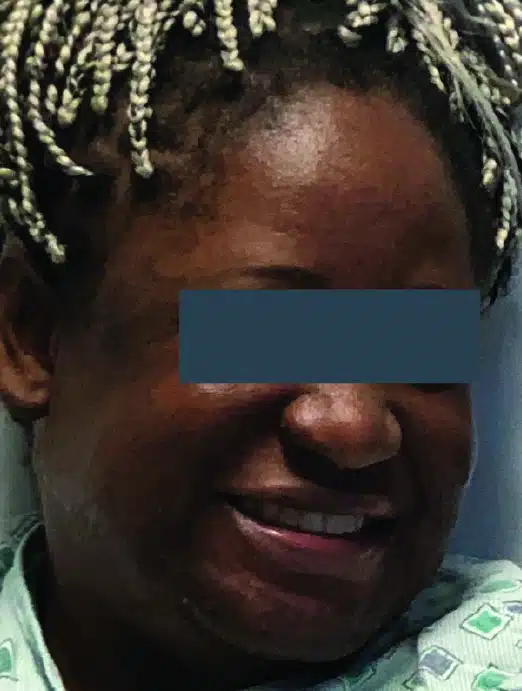
(After)
TBSA=total body surface area. Case report courtesy of Jeffrey Carter, MD, FACS, FABA (University Medical Center, New Orleans, LA).
Donor Sparing Case Example
Necrotizing soft tissue infection treated with reduced donor skin burden
Highlights:
- Patient declined initial surgical intervention, contributing to delayed treatment and infection progression
- RECELL enabled a minimally invasive grafting approach with a 6:1 mSTSG
- 100% graft take post-op day 6
45-year-old female | 104 cm² RECELL treatment area
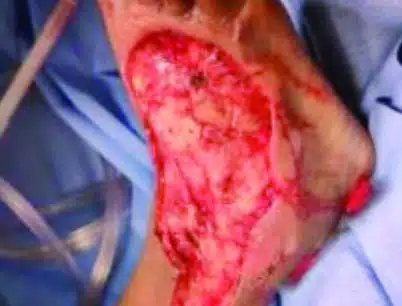
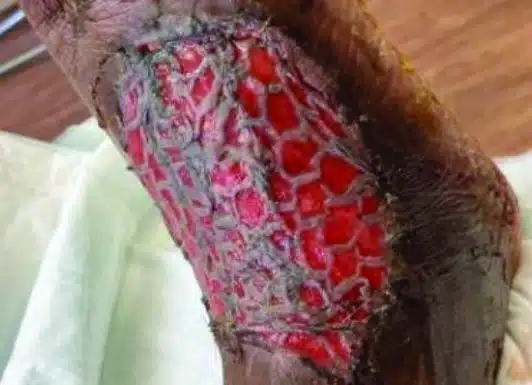
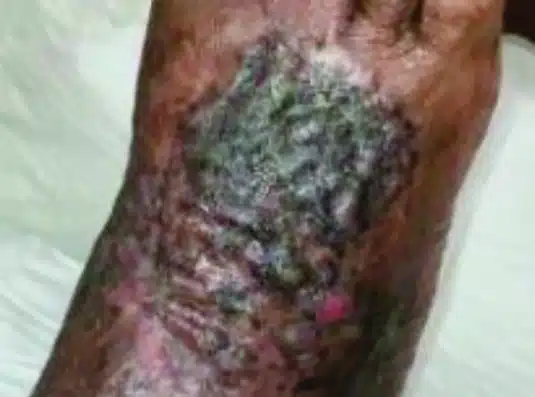
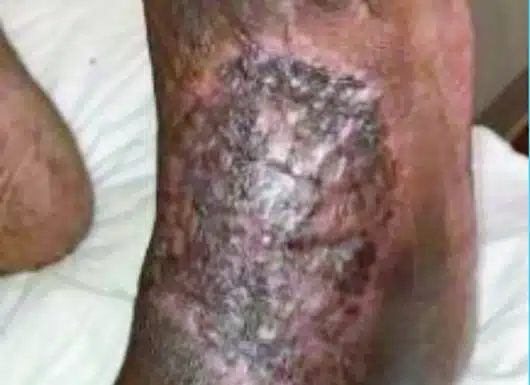
mSTSG=meshed split-thickness skin graft. Case report courtesy of Sarah Sample-Eppinger, DPM (Kettering Health Network; Beavercreek, OH).
Resources that support you and your patients
AVITA Medical is available to assist you with your coding and reimbursement questions. See our coding guide for information about coding for the use of RECELL and RECELL GO:
For general coding, coverage, and reimbursement questions that do not involve specific cases or patient health information, please e-mail us at: hema@avitamedical.com
For more in-depth support with benefits verification, prior authorization, appeals, or case-specific inquiries, please contact AVITA Patient Access Services at:
- E-mail: AVITA@alconj.org
- Phone: 1-866-965-3020
- Fax: 1-866-635-2270
- Instructions for Use. RECELL® Autologous Cell Harvesting Device.
- AVITA Medical Highlights Largest Real-World Analysis Demonstrating Reduced Hospital Stay with RECELL. Press release. June 9, 2025. Accessed September 29, 2025. https://ir.avitamedical.com/news-releases/news-release-details/avita-medicalhighlights-largest-real-world-analysis
- Holmes JH IV, et al. Burns. 2019;45(4):772-782.
- Navarro FA, et al. J Burn Care Rehabil. 2000;21(6):513-518.
- Collins ML, et al. J Surg Res. 2024;302:925-935.
- Holmes JH IV, et al. J Burn Care Res. 2018;39(5):694-702.
- Carter JE, et al. Adv Ther. 2022;39(11):5191-5202.
- Carson JS, et al. Burns. 2023;49(3):607-614.
- Henry S, et al. J Trauma Acute Care Surg. 2024;96(1):85-93.
- Bush KA, et al. Int Wound J. 2024;21(6):e14941
*RECELL GO mini is approved for use and commercially available in the United States only
**In adults with deep partial-thickness burns <30% TBSA